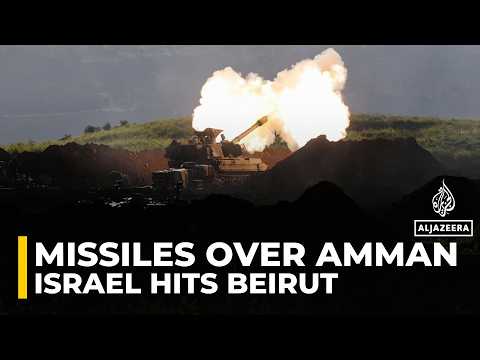
Original Source
Israel-Iran Missile Exchange Intensifies Amid Cluster Munition Claims, Mutual Strikes on Key Facilities
Iran's Alleged Use of Cluster Munitions and Israeli Casualties
The Israel Defense Forces (IDF) stated that almost half of the approximately 300 ballistic missiles launched by Iran were equipped with cluster munition warheads. Cluster munitions disperse dozens of small submunitions over a wide area instead of a single explosion, posing significant danger to both military personnel and civilians. Recently, a missile attack near Beit Shemesh in central Israel killed two people and seriously injured one.
While Israel's air defense systems intercepted most of the missiles, some penetrated the defenses. The frequency of Iranian missile launches, initially around 90 per day, has gradually decreased to fewer than 20 recently, suggesting that Iran's missile capabilities are under strain.
Israel Strikes Key Iranian Facilities, Expanding Counterattacks
The Israel Defense Forces (IDF) announced that it destroyed a ballistic missile launcher in western Iran with a drone strike just before launch, killing several soldiers. The IDF also reported striking central command centers of the Iranian terror regime in Tehran and Tabriz.
Targets included the special forces command center in Tabriz, the 'Imam Hassan' security force military facility in Tehran, the intelligence and general security police command center in Maragheh Province, and a large Basij force facility in Tabriz. Additionally, the IDF claimed to have dismantled key assets of the Iranian internal security forces and Basij forces in Ilam Province, including intelligence headquarters, internal security force headquarters, and Basij force facilities. Israel explained that these attacks aim to weaken the Iranian regime's operational capabilities and control systems.
Escalation of Middle East Conflict and Hezbollah's Involvement
Iran's Islamic Revolutionary Guard Corps (IRGC) conducted a large-scale missile attack targeting Israeli and U.S. assets, claiming it was the 37th wave of attacks. Military facilities in Haifa, Tel Aviv, West Jerusalem, near Be'er Ya'akov, and the Ha'ala Satellite Communications Center south of Tel Aviv were among the targets. An Israeli military spokesperson stated that Hezbollah is also attempting to expand its attacks into northern areas, and Israel is inflicting significant damage on Hezbollah's capabilities.
Israel eliminated Hezbollah's Nasr Unit commander Hassan Salameh and attacked over 30 of Hezbollah's economic assets to weaken its reconstruction capabilities. The continued escalation of military operations by both sides raises concerns about further intensification of the Middle East conflict. While over 100 countries have signed the international convention prohibiting the use of cluster munitions, Iran, Israel, and the United States are not signatories to this treaty.
*Source: YouTube: Times of India (2026-03-11)*